Physical Address
304 North Cardinal St.
Dorchester Center, MA 02124
Physical Address
304 North Cardinal St.
Dorchester Center, MA 02124

Trucking regulation changes are here for truckers in 2025. If you’re a professional driver, you need to know about the new CVSA Out-of-Service Criteria that started on April 1, 2025. These rules can affect whether you’re allowed to stay on the road—or if you’ll get shut down during an inspection.
Don’t worry—we’ve broken it all down in simple terms so you can keep driving safely and avoid trouble.

The Commercial Vehicle Safety Alliance (CVSA) is a group that sets rules for commercial trucks and buses across North America. They work with people in the U.S., Canada, and Mexico to keep the roads safe.
The Out-of-Service (OOS) Criteria are rules that tell inspectors when a truck, trailer, or driver is too dangerous to stay on the road. If you don’t meet these rules, you could be placed “out of service.” That means you have to stop driving until the problem is fixed.
These rules get updated every year. The 2025 version includes 15 changes to help make things safer and clearer for everyone.

This year’s update includes changes in areas like:
We won’t list all 15 here, but we’ll go over the ones that matter most to drivers.
Let’s get right into the stuff that can land a driver in trouble if they’re not careful.
If you don’t use your emergency brake properly during a stop or inspection, you could be marked out of service.
Inspectors are now more focused on Hours of Service (HOS). If your logbook or ELD shows that you’re driving too long or skipping required breaks, that’s a violation.
This seems simple, but if your seat belt doesn’t work or isn’t there, you’re done. This is an automatic out-of-service issue now.
Drivers hauling hazardous materials must now follow stricter rules about labels, containers, and placards. Make sure everything is in the right place and clearly marked.
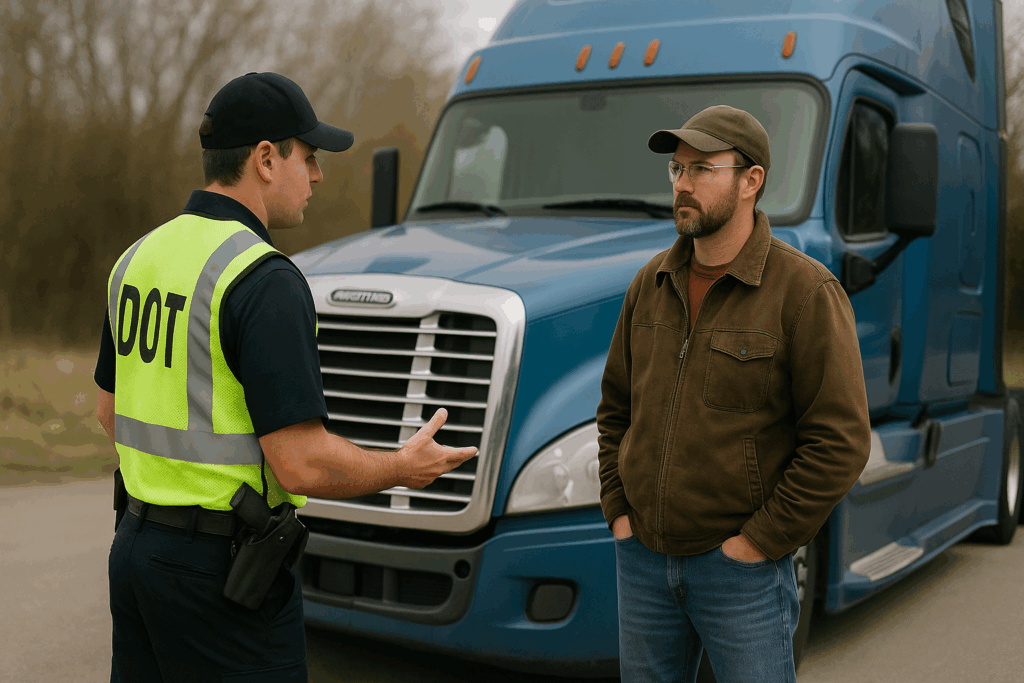
If your wipers don’t work or your washer fluid is empty, you could be pulled off the road.
Low tire pressure is now a bigger deal. If your tire is way under-inflated, that could be enough to shut you down.
Burned-out lights or missing reflectors are no longer “minor” issues. Inspectors are being stricter, especially if they affect visibility or safety.
This year, there’s a new focus on air hoses that rub or drag. If your hoses are too loose, you could be placed out of service.
As a driver, you’ll want to double-check your documents and tools before hitting the road.
Make sure you have:
Some changes are just about how documents are reviewed. But even a small mistake in your logbook could cost you time—and money.
These updates don’t just affect inspectors—they affect you every day you’re behind the wheel.
Here’s how:
Being ready is the best way to keep moving and avoid being shut down.
You’ll still go through the same kinds of inspections—Level I, II, III, etc.—but the checklist has changed slightly.
Here’s what to expect:
Pro tip: if you’re confident and organized during an inspection, you’re less likely to get hassled. A neat cab, clear logs, and working gear go a long way.
Here’s what we’re hearing:
Drivers: Some are frustrated because the changes feel like more work. But others say they appreciate the clarity and want to stay safe.
Companies: Most carriers are updating their training and telling drivers what to expect. Some are even offering bonuses for clean inspections.
Industry groups: Groups like OOIDA and ATA are keeping a close eye on how these new rules are enforced. They’re also pushing for fairness in how violations are handled.
A few rules that were “warnings” in 2024 are now automatic violations in 2025. For example:
So, if you’ve been getting by with “just okay” equipment or paperwork, now’s the time to level up.
Getting placed out of service doesn’t just waste time—it costs money.
Here’s how:
Even worse, multiple violations can hurt your PSP score or your company’s CSA rating, which might make it harder to get good loads.
These updates aren’t happening in a vacuum. They’re part of a bigger trend in trucking safety:
In the next few years, we’ll probably see even more focus on electric trucks, self-driving tech, and data-driven safety checks.
Here’s a quick driver checklist to help you stay compliant with the 2025 updates:
Pre-trip every day — check tires, brakes, lights, fluids
Keep logs clean and current — update your ELD after every stop
Double-check your medical card and CDL status
Secure and label hazmat correctly (if applicable)
Fix issues fast — don’t roll out with “I’ll get it next stop” problems
Use apps to track inspections, maintenance, and HOS
Technology is your friend—if you use it right.
ELDs: Make sure it’s updated and working right
Dashcams: Protect yourself in case of a crash
Inspection apps: Help you log your pre-trip properly
Maintenance reminders: Keep your truck road-ready
Some companies even offer driver portals where you can see violations, safety tips, and documents in one place.
No one likes new rules, but they’re part of the job. The good news? You’ve got everything you need to stay compliant, safe, and rolling—as long as you stay informed.
The best drivers aren’t just good behind the wheel—they’re smart, prepared, and ready for whatever comes next.
Drive safe out there.


